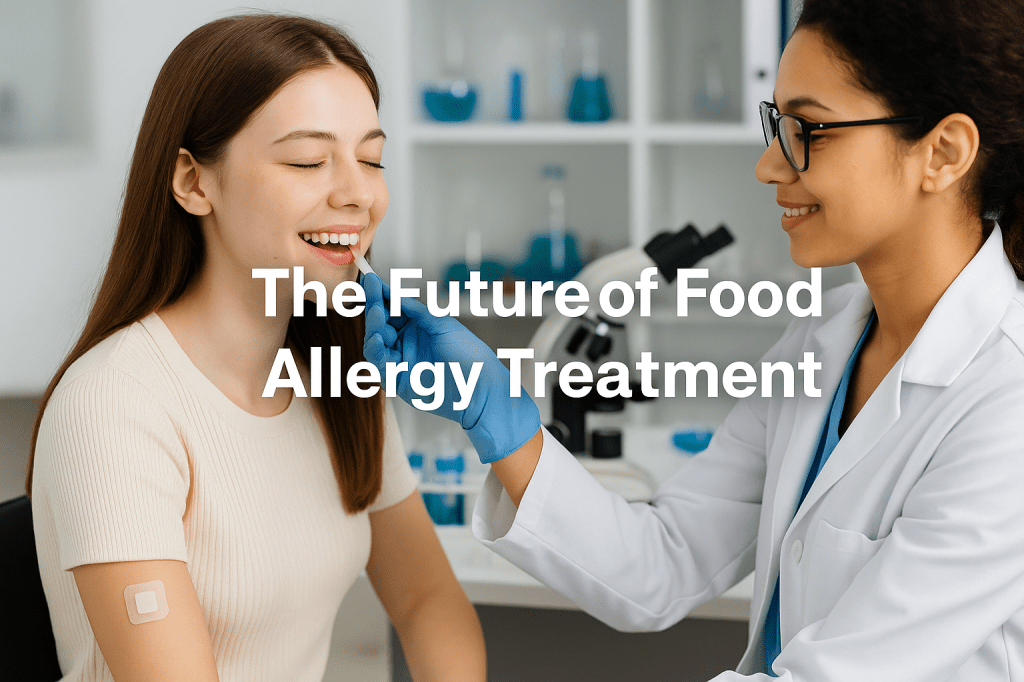
A New Era for Food Allergy Care
For years, living with food allergies has meant strict avoidance, careful label-checking, and the constant worry of accidental exposure. But new research is changing that picture. Scientists are developing treatments that not only reduce reactions, but actually retrain the immune system to tolerate allergens safely.
Oral Immunotherapy: Building Tolerance Bite by Bite
One of the most promising approaches is Oral Immunotherapy (OIT) — a treatment where patients consume tiny, gradually increasing amounts of their allergen under medical supervision. The first FDA-approved oral immunotherapy, Palforzia, now available for toddlers, helps build peanut tolerance through carefully escalated doses under medical supervision.
OIT has helped thousands of patients, but it can also trigger mild allergic reactions or stomach upset during treatment, and the protective effect often requires ongoing maintenance doses. Researchers are now finding ways to make OIT safer and more effective — especially when combined with new biologic therapies.
Xolair and the Rise of Combination Therapies
A major milestone came in 2024 with FDA approval of Omalizumab (Xolair), a biologic drug that blocks IgE antibodies responsible for allergic reactions. Clinical trials showed that patients treated with Xolair tolerated much higher doses of peanut and other allergens with far fewer side effects than traditional OIT alone (FARE).
This discovery has opened the door to combination therapies — using OIT alongside biologics to boost safety and effectiveness.
Beyond Pills: Patches, Early Treatment, and Vaccines
Another exciting option is the peanut patch (Viaskin Peanut), which delivers tiny doses of peanut protein through the skin. This approach may be especially useful for toddlers and young children. In fact, recent studies found that starting therapy before age three can sometimes lead to complete remission (UVA Health Newsroom).
Researchers are also exploring repurposed medications and vaccine-style therapies. One asthma drug, zileuton, blocked allergic reactions in mice, while a peanut “vaccine” using virus-like particles showed success in early human trials.
The Road Ahead
While there’s still no universal cure, these discoveries mark a turning point. From OIT to biologics, patches, and vaccines, a new generation of therapies is helping people with food allergies live safer, freer, and more confident lives.
The future of food allergy treatment isn’t just about avoiding danger — it’s about reclaiming possibility.

 Eat Smart. Live Safe. Enjoy Life on Campus.
Leave a reply to AllergyMomof2 Cancel reply